
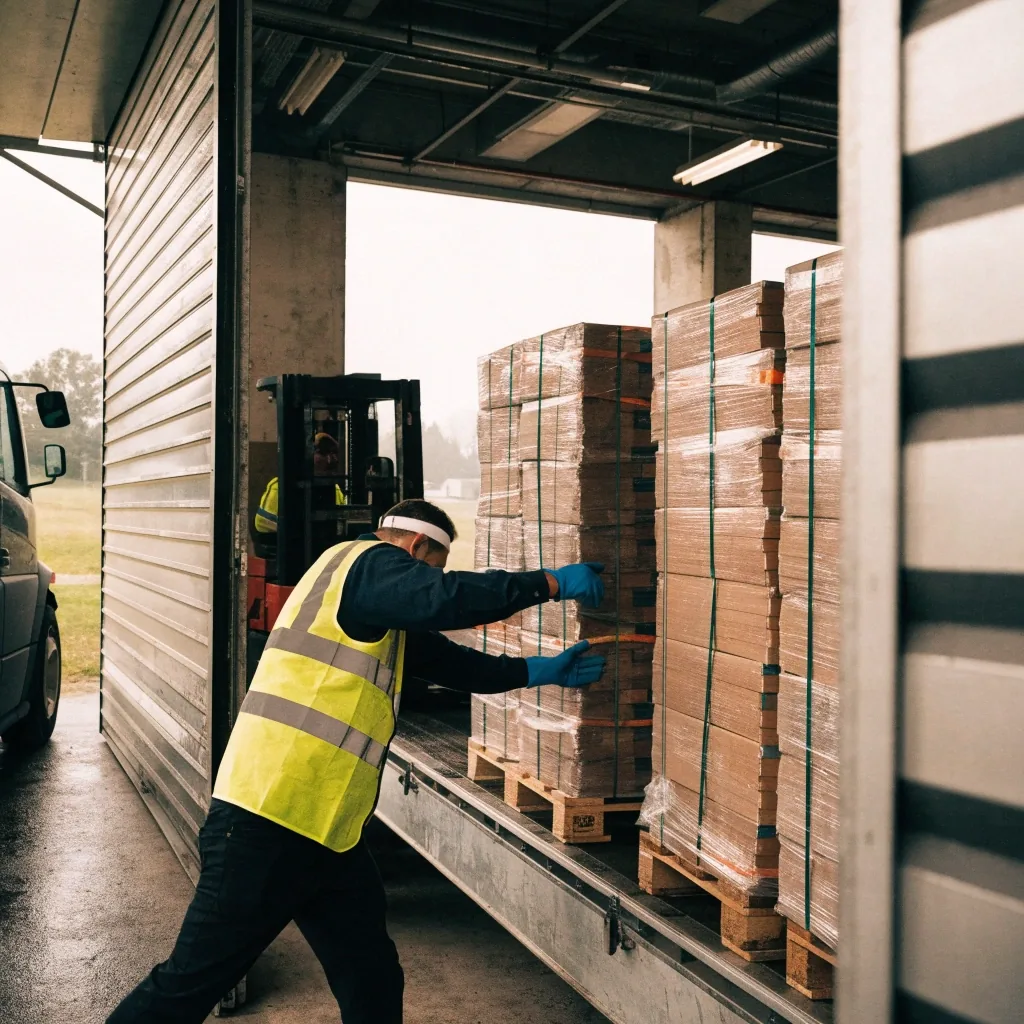
Services from Lochristi, East Flanders
Transport and logistics services we run
One trailer does not fit every shipment. This page sets out what we actually operate from Lochristi: groupage, full and part loads, refrigerated transport, warehousing, customs clearance and last-mile delivery. Read the section that matches your cargo, or send us the details and we will point you to the right one.
What this page covers
Eight services- Groupage transport
- Full load transport
- Part load transport
- Refrigerated and temperature-controlled transport
Warehousing, cross-docking, customs clearance, cross-border distribution and last-mile delivery follow below.
Where to start
Most enquiries need two or three of these
A manufacturer sending four pallets a week to a French distributor needs groupage and customs, nothing more. An importer bringing containers through Antwerp may need warehousing, cross-docking and onward full loads.
The useful question is what happens to your cargo between pickup and delivery. Answer that and the service mix usually picks itself. If you are unsure which combination applies, describe the route and the deadline and we will map it to the sections below.

Groupage transport
Shared trailer, scheduled departures
Groupage is a shared trailer. Several shippers' pallets travel together on one scheduled run, and you pay for the space you use rather than the whole vehicle. It suits regular replenishment, smaller consignments and anyone whose delivery date has a day or two of slack.
The trade-off is a fixed departure schedule: if your goods miss the cut-off, they wait for the next run. For steady volumes that predictability is fine, and the cost per pallet stays reasonable. Tell us the pallet count and the delivery window and we will confirm which scheduled run takes it.
Best fit for groupage
- Weekly or fortnightly replenishment runs
- Smaller consignments of one to three pallets
- Deliveries with a day or two of slack in the date
- Senders who want a predictable cost per pallet
Not the right fit if the load has to leave the same day it is ready.
Full load transport
When you have enough volume to fill a trailer, a full load removes the consolidation step entirely. The vehicle goes from your loading point to your delivery point, which cuts handling and shortens transit.
Full loads make sense for high-value cargo, oversized items, or anything that needs to arrive on a fixed clock. You also avoid the risk of a co-loaded shipment delaying yours. Tell us the weight, dimensions and loading conditions and we will confirm the right trailer type.
What we need at booking
- Weight and dimensions
- Total gross weight, pallet or crate footprint, and the longest single item.
- Loading conditions
- Whether the site has a dock, a forklift or needs side loading, and whether the goods can be stacked.
- Timing
- Collection slot, delivery slot, and how much flexibility the receiver has on arrival.
- Documentation
- Commercial invoice and packing list ready, or still in preparation.
Part load transport
Part loads sit between the two. You are not filling a trailer, but you do not want to wait for a groupage schedule either. Typically that is four to twelve pallets with a deadline that matters.
You share trailer space, keep a tighter departure window and accept a slightly higher rate than standard groupage. It is the option most shippers ask about once they have tried both extremes and found neither quite fits.
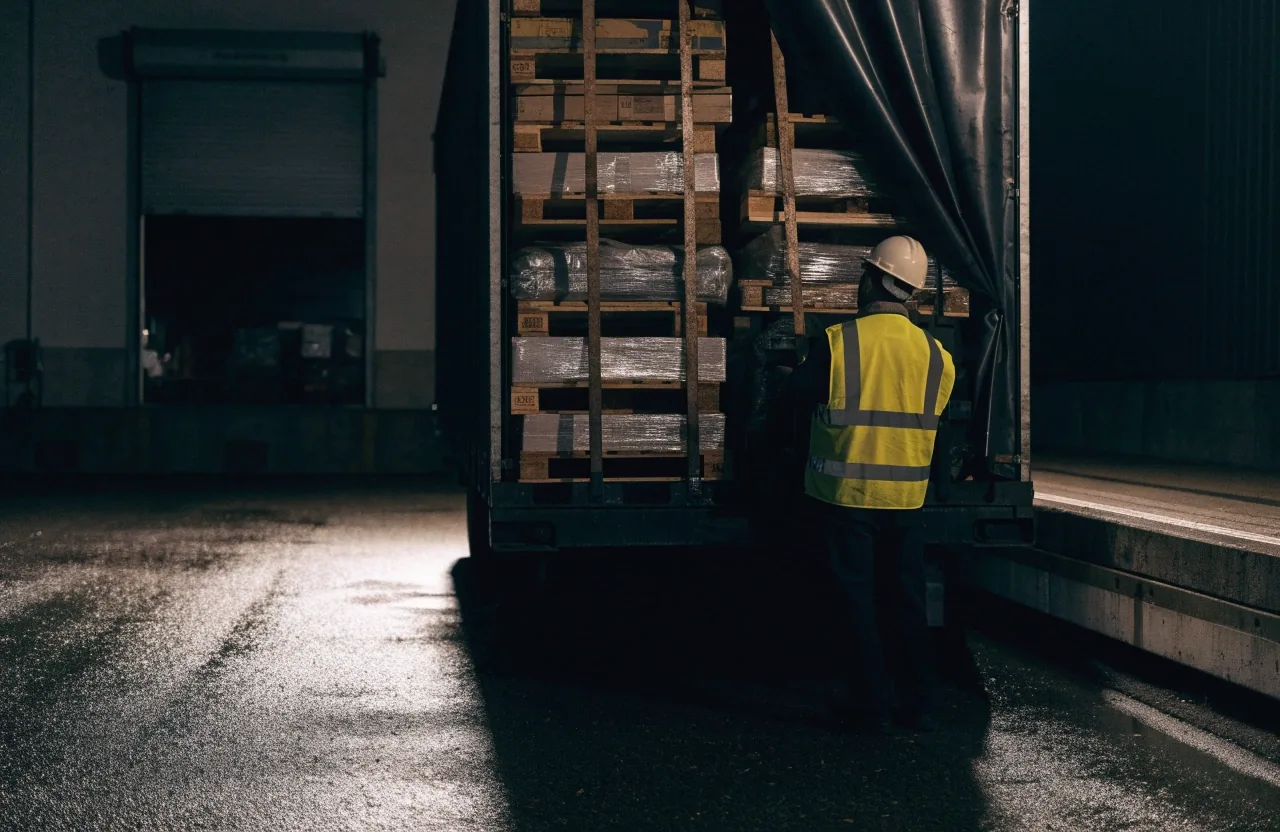
Refrigerated and temperature-controlled transport
Temperature-controlled freight needs a unit that holds its range from loading through to unloading, not just a refrigerated trailer that looks the part.
At pickup
We plan these movements with tighter checks before the doors close: the set temperature confirmed against the goods, the unit running at range, and the load secured so the air can still move around it.
In transit
The unit holds its range for the whole run, not just at the start. Food, certain chemical cargoes and pharma-adjacent goods usually fall into this category, and each has its own handling notes.
At delivery
The receiver needs to know the goods arrived in condition, so we give clear instructions on the receiving end and the temperature record travels with the shipment.
If your cargo has a temperature band rather than a fixed figure, tell us the band and the acceptable tolerance at delivery. That detail decides which unit we assign.
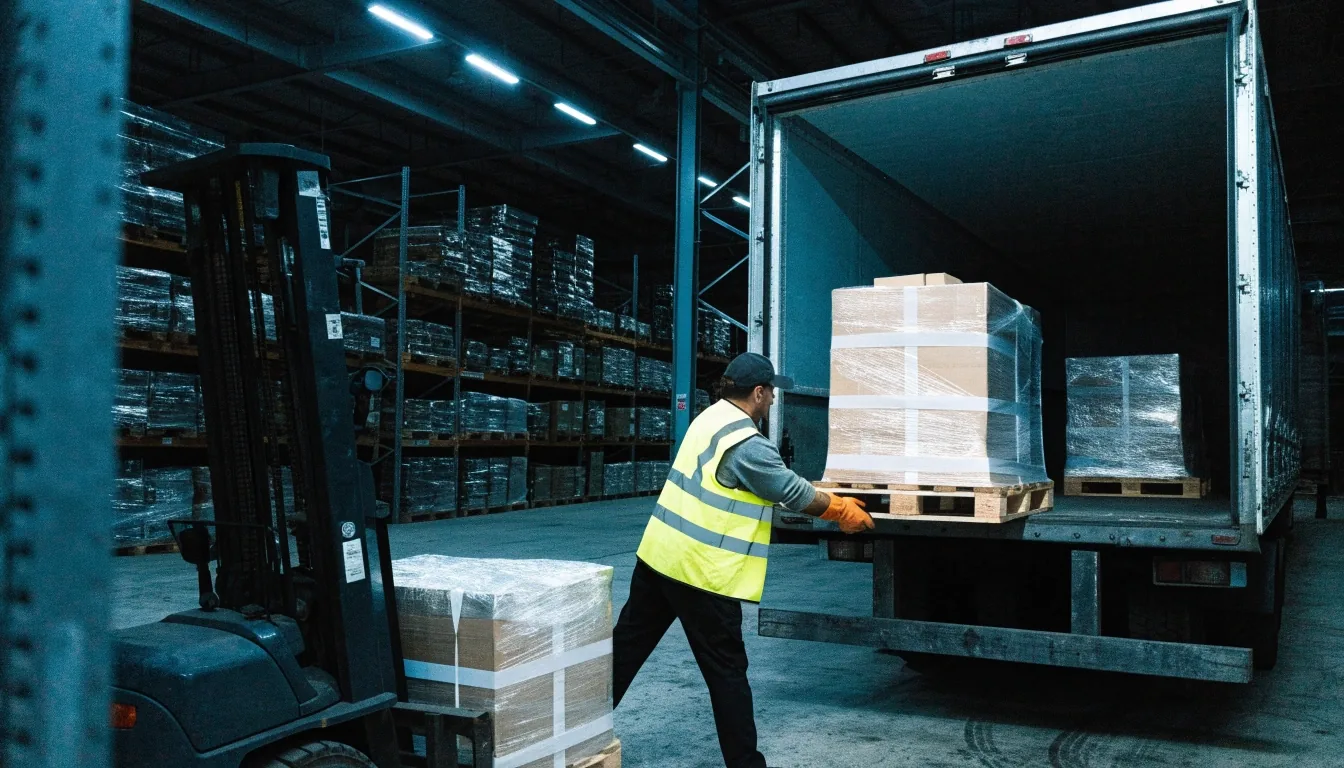
Warehousing and cross-docking
Our Lochristi site handles palletised freight for short-term storage, cross-docking and order preparation. Cross-docking is useful when goods arrive from one supplier and leave again on a different outbound route without sitting in storage. Longer holding works when you need a buffer between production and delivery.
Because we are in East Flanders, goods can move between warehouse and trailer without a long repositioning leg, which keeps the handover simple. That matters most when an inbound arrival and an outbound departure are close together and the pallet has to change vehicles rather than wait.
What to send with a storage request
- Pallet count, dimensions and whether the goods stack
- Expected arrival date and the date it needs to leave again
- Whether it is storage, cross-docking or order preparation
Customs clearance
Cross-border freight brings documentation. We prepare and manage commercial invoices, packing lists, transport documents and the declarations that accompany them.
Tariff classification
The code your goods fall under decides duty and which rules apply. It is the first thing we confirm.
Origin rules
Where the goods were produced can change the rate, so the paperwork has to say the same thing as the invoice.
Certificates and permits
Requirements change, and they vary by product and destination. We check what applies to your shipment.
Declarations
Prepared and filed with the rest of the document set before the vehicle reaches the border.
A shipment that is described accurately on paper clears faster than one that needs clarification at the border. We would rather ask two extra questions at booking than explain a hold three days later.
Cross-border distribution
Belgium sits in the middle of Western Europe's freight map, which makes it a natural base for distribution into neighbouring markets.
Our cross-border work runs primarily into the Netherlands, Luxembourg, France and Germany.
Transit depends on the corridor, the border crossing and whether the receiver can accept delivery inside their opening hours. We plan around those constraints instead of quoting a figure that ignores them.
Check route coverageMarkets we run into most

Last-mile delivery
The final leg decides whether a shipment lands cleanly. Belgian city centres have delivery windows, low-emission zones and streets closed to large vehicles.
We plan the last mile separately, using smaller vehicles, timed slots or an agreed pickup point where the receiver accepts it. Building this into the plan from the start avoids the situation where a trailer arrives at a city limit and nobody can take the goods further.
Matching cargo to service
Read down the shipment type, then across to what usually applies.
Questions we get before booking
Short answers to the three things shippers ask most often.
Can I mix services on one shipment?
Yes, and it is common. A shipment might arrive by full load, sit in our warehouse for a few days, then leave on an outbound groupage run. We quote the combination as one plan rather than separate jobs.
What size shipment suits a part load?
Part loads typically cover four to twelve pallets. Below that, groupage is usually cheaper. Above it, a full load often makes more sense. We will confirm based on your actual weight and dimensions.
Do you deliver to private addresses?
Our work is business-to-business freight. Deliveries to commercial premises, warehouses and distribution centres are standard. Residential delivery depends on access and whether a suitable vehicle can reach the address, so ask before booking.
Next step
Send the route and we will name the service mix
Tell us the pickup address, the delivery address, the pallet count and the date the goods are ready. If the load crosses a border, mention the product and the destination country so we can check the customs side before quoting.
Operations desk